Transfer Printing on Glass Dryers: Why Shortwave Infrared Halogen Lamps Are the Only Option
We build shortwave infrared halogen lamps for one reason: to hit the glass hard—and fast. Because when you’re transfer printing on glass, the ink and glaze don’t want a slow warm-up. They need an instant, deep thermal shock. No soaking. No waiting around. The aim is a glaze so smooth it looks like a mirror, and that only happens with a very specific kind of heat.
Power, Voltage, and Geometry—Kept Simple
Here’s the thing: these lamps are all about packing serious power into a small space. Most setups run at 400V, and the wattage is scaled to match your line speed and the energy you need per square centimeter. The tube length is chosen to fit the dryer’s heating zone—often around 300mm—so you can fit multiple units side-by-side in a narrow conveyor and still get even coverage. It’s not just about raw wattage, either. Shortwave infrared halogen elements blast intense radiation that penetrates the printed layer fast, triggering binder burn-off and glaze fusion in seconds. If your dryer is built for high throughput, the lamp has to deliver that thermal punch again and again, cycle after cycle.
What’s Inside: Halogen, Quartz, Coating, and Connectors
At the core is a halogen-filled quartz tube. The halogen chemistry does something clever: it keeps the filament stable at high temperatures by returning tungsten back to the filament. That fights blackening and keeps output consistent over the lamp’s life. And the quartz envelope? It handles rapid temperature swings and high internal pressure, which matters when you’re switching the lamp on and off all day on a production line. We also add a specialized coating on the quartz to manage the spectral output and protect the element from contaminants inside the dryer. For installation, we spec R7s or Sk15 connectors. They’re built for high-temperature terminals and hold tight mechanically. Wire it up once, and it stays put—no loose contacts, no arcing under load.
On the Shop Floor: Why This Matters for Transfer Printing
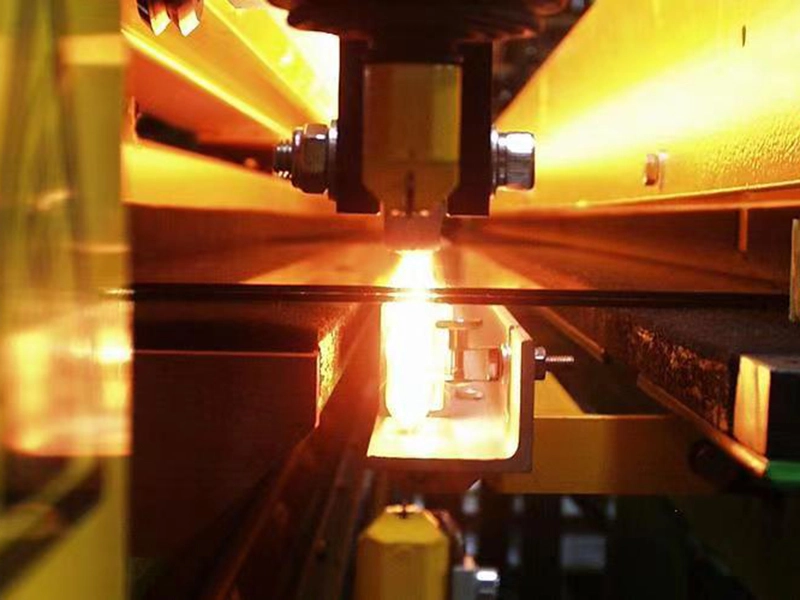
When you’re transfer printing on glass, you need heat that hits the printed layer first—before it sinks into the glass. Shortwave infrared halogen lamps focus energy right on the surface, so the glaze fuses and levels quickly. The result is uniform gloss, controlled texture, and color that stays true, run after run. And in practice? That means faster line speeds and fewer scrapped pieces from uneven melt. These lamps are a drop-in replacement for existing infrared dryers, and the footprint is small enough to retrofit even into tight spaces. One trade-off: high power density means your dryer’s cooling and thermal management have to be up to the job. If the chamber can’t shed heat, the lamp runs hotter than designed, and lifespan drops. Plan the airflow and shielding properly, and the lamp will take the beating all day.