
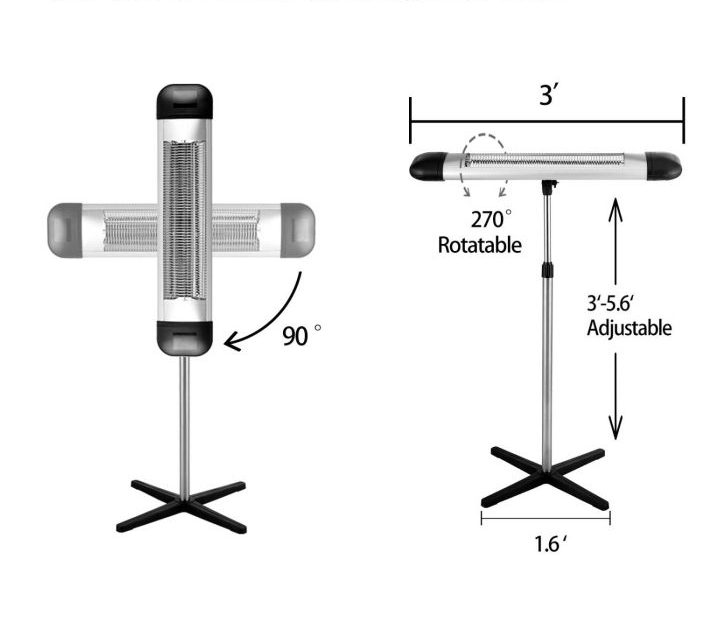
Making Your Outdoor Heaters Actually Smart
Let’s be honest: nobody wants to wait twenty minutes for a patio heater to warm up while they’re shivering in a coat. That’s why we stick with short-wave infrared. Instead of trying to heat the entire outdoors—which is a losing battle—these lamps beam heat directly onto you. It’s like stepping into a patch of sunlight on a cold day. You flip a switch, and you feel it.Instantly.
How the Magic Happens
Getting a heavy-duty heater to talk to a smartphone isn’t rocket science, but it does take a bit of grit. We tuck a heavy-duty relay or a dimmer into the power circuit. Think of it as a translator. Your smart hub sends a tiny “hey, turn on” signal, and the controller flips the big switch that lets the power roar into the heating element. Now, a quick heads-up on the boring stuff:**waterproofing is non-negotiable.**Moisture and electricity don’t mix, so we keep everything sealed tight. Also, keep an eye on your electrical panel. These lamps pull a lot of juice. If you fire up five of them at the exact same second, you might just find yourself sitting in the dark.
Set It and Forget It
The secret to that immediate warmth is a tungsten filament that hits its peak temperature in milliseconds, protected by a quartz glass shell. But the real win is the automation. You can link your heaters to an outdoor sensor. So, the moment the evening air dips below 60 degrees, the lamps kick in. You don’t even have to think about it; the patio is just… warm.
The “What If” Factor
Here is the thing about smart homes: sometimes the Wi-Fi decides to take a nap. Or the hub crashes. If you rely solely on an app, a router glitch turns your fancy heater into an expensive piece of wall art. We hate that. That’s why we always put a manual override switch right on the unit. It’s a simple, old-school mechanical bypass. If the internet dies, you just walk over, flip the switch, and get warm. Simple as that.