



Stop Fighting Your Ceiling Heaters
Let’s be honest: most industrial ceiling heaters are a nightmare the moment something goes wrong. Imagine a heating element burns out in the middle of a shift. Suddenly, you’re staring at a mountain of work. You have to tear down mounting brackets, mess with junction boxes, and rewire half the unit just to swap out one single tube. You aren’t just losing a part; you’re losing hours of production. It’s frustrating, and it’s a waste of time. We decided to stop doing that.
The “Slot and Lock” Approach
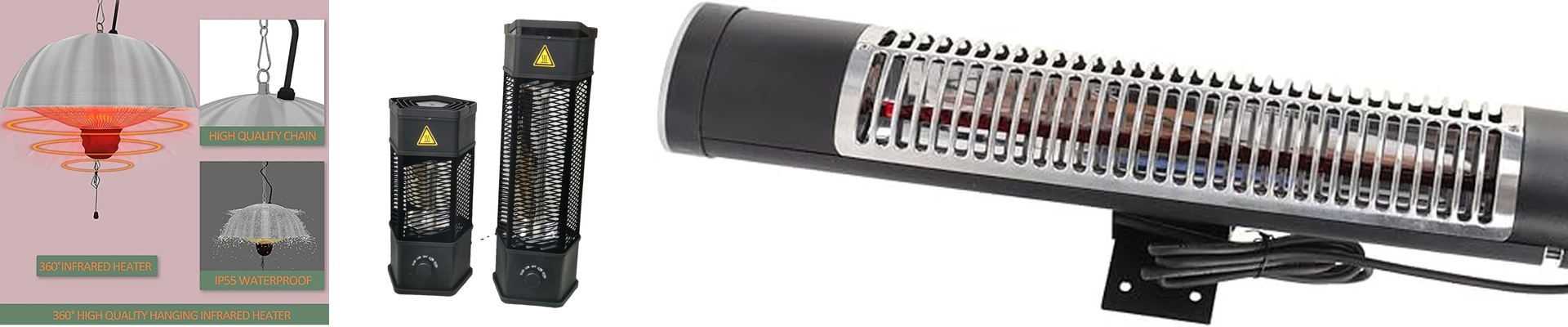
Instead of one giant, fused machine, we build our units with independent heating modules. Think of it like a toaster. Each element has its own dedicated slot and quick-release fasteners. If a tube dies, you don’t dismantle the whole chassis. You just pull the failed tube out, slide a new one in, and lock it down.**A four-hour headache becomes a fifteen-minute job.**It’s that simple.
The Nitty-Gritty
We also got rid of the messy stuff. No field soldering. No complex crimping. We use standardized, plug-and-play terminals so you can’t really mess up the wiring on the shop floor. As for the frame, we use heavy-gauge steel. Why? Because constant heat makes metal warp. If the frame bends, your tubes won’t sit right, and your heat distribution goes out the window. We built it beefy so it stays straight.
A Fair Trade
Now, here’s the catch: modular designs take up a bit more room than those welded, all-in-one units. Your footprint will be slightly larger. But look at it this way. A compact unit is cheaper to ship, sure. But it’ll cost you a fortune in labor every time a lamp pops. We’d rather give you a few extra inches of space if it means you aren’t spending your entire afternoon on a ladder.
Playing the Long Game
After five years, thermal fatigue happens. It’s just physics. Quartz tubes eventually wear out. The trick is to stop thinking of the heating element as a permanent part of the building and start seeing it as a consumable—like a lightbulb. When the time comes, just check your voltage, grab the right replacement tubes, and swap them out. Your system keeps humming along, and you don’t have to replace the entire ceiling assembly.